















November 30, 2017
Global Entrepreneurship Summit held in Hyderabad, India
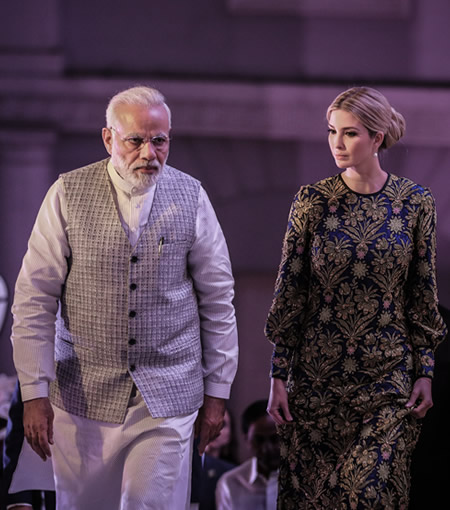
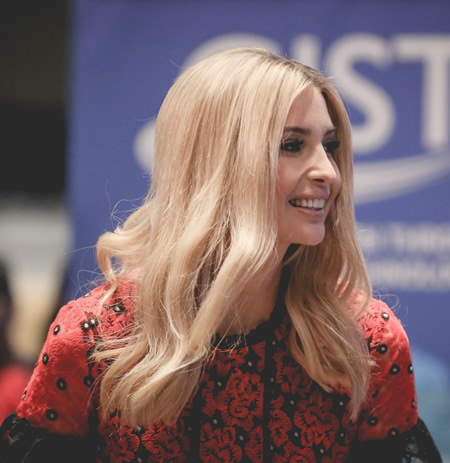

Photos: Global Entrepreneurship Summit, Hyderabad, India. November 28-30, 2017. (From top) Prime Minister of India Narendra Modi and Ivanka Trump, Advisor to the President of the USA, at GES 2017; Ivanka Trump, Advisor to the President of the USA, attending GES 2017; Manushi Chhiller, the newly crowned Miss World 2017 from India, attending GES 2017. Images provided by & copyright © GES 2017.
The Global Entrepreneurship Summit was held for the first time in South Asia in Hyderabad, India, from November 28-30. It was co-hosted by the Governments of the United States and India. Prime Minister of India, Narendra Modi, inaugurated the summit along with Advisor to the President of the USA, Ivanka Trump, who lead the U.S. contingent to GES.
This was the eighth edition of the Global Entrepreneurship Summit, the preeminent gathering of entrepreneurs, investors, and supporters from around the world. With the theme of “Women First, Prosperity for All,” this was the first GES in which women were in the majority.
More than 10 countries were represented by an all-female delegation, including from Afghanistan, Saudi Arabia, and Israel. A number of leading female voices, which included tennis champion Sania Mirza, spoke at various plenaries, breakout sessions, master classes, and workshops.
|GlobalGiants.Com|


Edited & Posted by Editor | 2:54 PM | Link to this Post
November 27, 2017
Miss Universe South Africa 2017, Demi-Leigh Nel-Peters, is the new Miss Universe
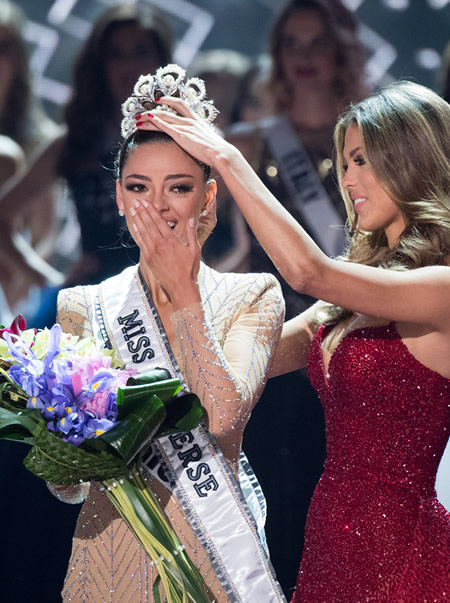
Photo: Demi-Leigh Nel-Peters, Miss Universe South Africa 2017, is crowned the new Miss Universe by Miss Universe 2016, Iris Mittenaere, at the conclusion of the three-hour special programming event airing on FOX live on Sunday, November 26th from the AXIS at Planet Hollywood Resort & Casino in Las Vegas, NV. The new winner will move to New York City where she will live during her reign and become a spokesperson for various causes alongside The Miss Universe Organization. Photographer: Matt Petit. Image provided by & copyright © The Miss Universe Organization, New York.
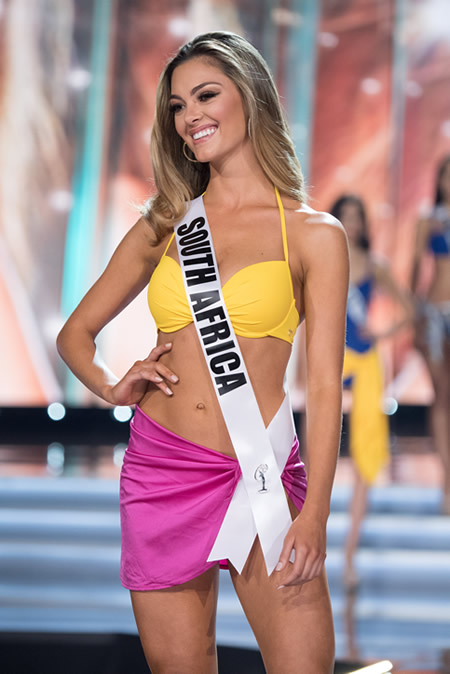
Photo: Demi-Leigh Nel-Peters, Miss Universe South Africa 2017, is announced as a top 10 finalist in Yamamay swimwear during The MISS UNIVERSE Competition airing on FOX live on Sunday, November 26th from the AXIS at Planet Hollywood Resort & Casino in Las Vegas, NV. Photographer: Matt Petit. Image provided by & copyright © The Miss Universe Organization, New York.
LAS VEGAS, Nov. 27, 2017 — Last night, Miss Universe South Africa Demi-Leigh Nel-Peters was crowned the new Miss Universe at Planet Hollywood Resort & Casino in Las Vegas. The three-hour special programming event aired live on FOX in the United States.
Demi-Leigh Nel-Peters earned her degree in Business Management at North West University. Before college, Demi-Leigh excelled at her high school as president of student council.
Now in its 66th year, MISS UNIVERSE welcomed more contestants than ever before, representing 92 countries including Iraq, Laos, Malta, and Nepal. The top 16 finalists were selected from three regions of the world: Americas, Europe, Africa & Asia Pacific. Fans once again had a virtual seat at the judging table to help their favorite contestants advance with over 90 million votes tabulated from around the world leading up to the competition, and an additional 24 million submitted throughout the final event.
Emmy Award winner Steve Harvey hosted the competition with model, entrepreneur and body activist Ashley Graham as backstage host. TV personality and fashion expert Carson Kressley and supermodel and pageant expert Lu Sierra provided analysis and commentary throughout the telecast. Eight-time Grammy Award-winning, multi-platinum solo artist Fergie performed along with multi-platinum, award-winning pop star Rachel Platten.
The judges who helped crown Miss Universe included:
- Wendy Fitzwilliam: Miss Universe 1998, Trinidadian lawyer, actress, model and TV host.
- Jay Manuel: TV Personality and CEO of Jay Manuel Beauty, creative director, renowned make-up artist and entrepreneur.
- Ross Mathews: TV personality, live event correspondent, author and judge on “RuPaul’s Drag Race.”
- Megan Olivi: UFC backstage correspondent and host of The Exchange with Megan Olivi on UFC Fight Pass; advocate of women in sports.
- Lele Pons: Venezuelan-American creator and one of digital entertainment’s most recognizable figures; named one of TIME magazine’s 2016 30 Most Influential People on the Internet and Forbes’ 2017 30 Under 30 Celebrities.
- Farouk Shami: Entrepreneur and founder of Farouk Systems, makers of CHI & Biosilk.
- Pia Wurtzbach: Miss Universe 2015, model, actress.
Final Results:
First Runner-Up: Miss Universe Colombia Laura González
Second Runner-Up: Miss Universe Jamaica Davina Bennett
Top Three: Miss Universe South Africa Demi-Leigh Nel-Peters; Miss Universe Colombia Laura González; Miss Universe Jamaica Davina Bennett
Top Five: Miss Universe South Africa Demi-Leigh Nel-Peters; Miss Universe Venezuela Keysi Sayago; Miss Universe Thailand Maria Poonlertlarp; Miss Universe Jamaica Davina Bennett; Miss Universe Colombia Laura González.
Top Ten: Miss Universe Venezuela Keysi Sayago; Miss USA Kára McCullough; Miss Universe Philippines Rachel Peters; Miss Universe Canada Lauren Howe; Miss Universe South Africa Demi-Leigh Nel-Peters; Miss Universe Spain Sofia del Prado; Miss Universe Brazil Monalysa Alcântara; Miss Universe Colombia Laura González; Miss Universe Thailand Maria Poonlertlarp; Miss Universe Jamaica Davina Bennett.
Top Sixteen: Miss Universe Thailand Maria Poonlertlarp; Miss Universe Sri Lanka Christina Peiris; Miss Universe Ghana Ruth Quarshie; Miss Universe South Africa Demi-Leigh Nel-Peters; Miss Universe Spain Sofia del Prado; Miss Universe Ireland Cailín Áine Ní Toibín; Miss Universe Croatia Shanaelle Petty; Miss Universe Great Britain Anna Burdzy; Miss Universe Colombia Laura González; Miss USA Kára McCullough; Miss Universe Brazil Monalysa Alcântara; Miss Universe Canada Lauren Howe; Miss Universe Philippines Rachel Peters; Miss Universe Venezuela Keysi Sayago; Miss Universe Jamaica Davina Bennett; Miss Universe China Roxette Qiu.
|GlobalGiants.Com|
Congratulations Demi-Leigh Nel-Peters !!
— Surender Hastir (@SurenderHastir) November 27, 2017
Miss Universe 2017 !!
Relive our new #MissUniverse's answer to the Final Word. pic.twitter.com/czO8vgSiuU
— Miss Universe (@MissUniverse) November 27, 2017
#MissUniverse 2017 Demi-Leigh Nel-Peters started off her Media Tour in Times Square! Welcome to NYC 🍎 pic.twitter.com/ymGtENuwHA
— Miss Universe (@MissUniverse) November 28, 2017
"Girl…you don’t need a sash or crown to be a Miss Universe. You can be a leader in your community without having a title.” — 2017 @MissUniverse winner Demi-Leigh Nel-Peters offers advice to girls who hope to follow in her footsteps one day. pic.twitter.com/4sUjxFSShC
— Good Morning America (@GMA) November 28, 2017
Wonderful !!
— GlobalGiants.Com (@GlobalGiants) November 28, 2017
Edited & Posted by Editor | 6:07 AM | Link to this Post
November 21, 2017
UN Security Council & UN Assembly Fill Fifth Vacancy on World Court. Dalveer Bhandari of India elected.
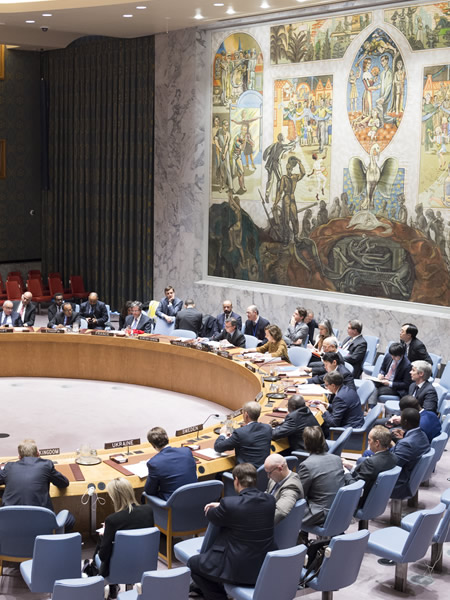
Photo: The UN Security Council and the General Assembly, meeting concurrently but independently from each other, filled the final vacancy on the International Court of Justice (ICJ).
Dalveer Bhandari (India) was elected by both bodies for a nine-year term beginning on 6 February 2018, joining the four justices elected on 9 November from a list of six candidates.
Above, a view of the Security Council meeting. 20 November 2017. United Nations, New York. UN Photo/Rick Bajornas.
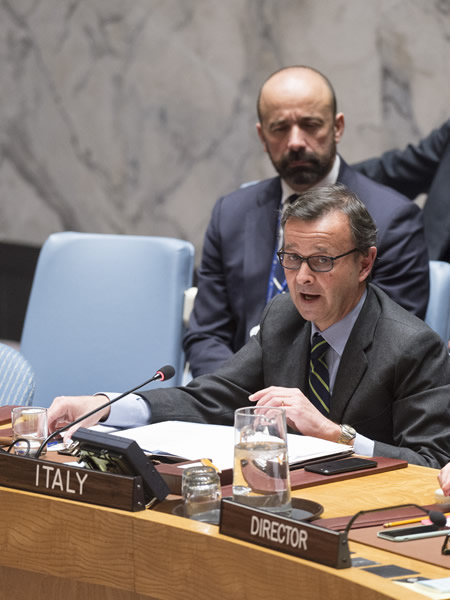
Photo: The UN Security Council and the General Assembly, meeting concurrently but independently from each other, filled the final vacancy on the International Court of Justice (ICJ).
Dalveer Bhandari (India) was elected by both bodies for a nine-year term beginning on 6 February 2018, joining the four justices elected on 9 November from a list of six candidates.
Above, Sebastiano Cardi, Permanent Representative of Italy to the UN and President of the Security Council for November, chairs the Council’s meeting. 20 November 2017. United Nations, New York. UN Photo/Rick Bajornas.
The President of India, Ram Nath Kovind, and the Prime Minister of India, Narendra Modi, have congratulated Justice Dalveer Bhandari on being re-elected to the International Court of Justice.
|GlobalGiants.Com|
Edited & Posted by Editor | 12:13 PM | Link to this Post
November 17, 2017
‘Discrimination against one is discrimination against all,’ says UNESCO on Day for Tolerance
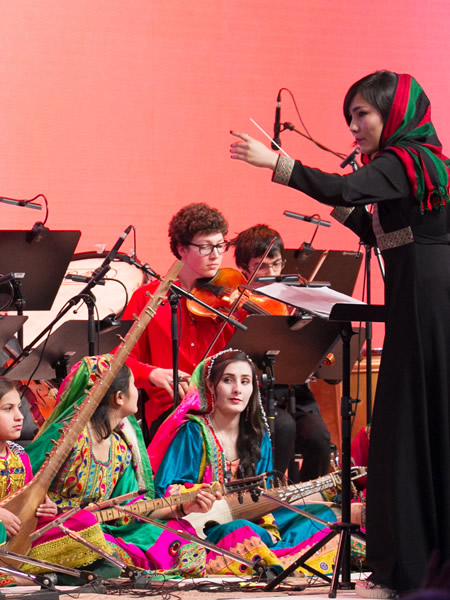
Photo: The Afghan Women’s Orchestra “Zohra” from Kabul joins forces with members of Geneva’s youth Orchestre du Collège for a powerful affirmation of friendship and trust across cultures during Closing Performance at the Annual Meeting 2017 of the World Economic Forum in Davos, Switzerland. January 20, 2017. Image provided by & copyright © World Economic Forum / Greg Beadle.
16 November 2017 - Marking the International Day for Tolerance, the head of the United Nations cultural agency underscored how tolerance must be nurtured to celebrate the diversity that makes us strong and the values that bring us together.
“Tolerance is respect, acceptance and appreciation of the rich diversity of our world’s cultures, our forms of expression and ways of being human,” said Audrey Azoulay, the newly-appointed Director-General of the UN Educational, Scientific and Cultural Organization (UNESCO), in her message on the International Day.
“Discrimination against one is discrimination against all,” she continued.
Ms. Azoulay pointed out that as globalization is accelerating across the world, societies are undergoing deep transformations, which open vast opportunities for dialogue and exchange as well as raise new challenges - sharpened by inequality and poverty, enduring conflicts and movements of people.
“We see today the rise of exclusive politics and discourses of division. We see diversity being rejected as a source of weakness,” she said.
Ms. Azoulay maintained that fuelled by ignorance and sometimes hatred, myths of “pure” lore cultures are being gloried while scapegoating and repressing people.
Also citing “barbaric terrorist attacks designed to weaken the fabric of ‘living together,’” she spotlighted the need that tolerance be more than the indifferent, passive acceptance of others.
“Tolerance must be seen as an act of liberation, whereby the differences of others are accepted as the same as our own,” stressed Ms. Azoulay.
The UN official said that that meant respecting the diversity of humanity on the basis of human rights; reaching out to others with dialogue; and standing up to all forms of racism, hatred and discrimination.
Noting that all cultures are different, she emphasized that “humanity is a single community, sharing values, a past and future.”
“There are seven billion ways of ‘being human,’ but we stand together as members of the same family, all different, all equally seeking respect for rights and dignity,” she underscored.
Ms. Azoulay termed tolerance “a struggle for peace” that calls for new policies that respect diversity and pluralism on the basis of human rights.
“Most of all,” she added, “this calls on each of us, women and men across the world, to act for tolerance in our own lives, in seeking to understand others, in rejecting all racism and hatred, including anti-Semitism.”
The UNESCO chief said its role is “to deepen the binds of a single humanity, through understanding, dialogue and knowledge,” which is why the UN agency defends humanity’s cultural diversity and heritage from pillaging and attacks.
“This is why we seek to prevent violent extremism through education, freedom of expression and media literacy, to empower young women and men. This is why we work to strengthen dialogue between cultures and religions, spearheading the International Decade for the Rapprochement of Cultures,” she said, adding that it was also why “UNESCO’s International Coalition of Inclusive and Sustainable Cities works to fight racism, discrimination, xenophobia and exclusion.”
|GlobalGiants.Com|
Edited & Posted by Editor | 2:36 PM | Link to this Post
November 13, 2017
Audrey Azoulay of France appointed Director-General of UNESCO
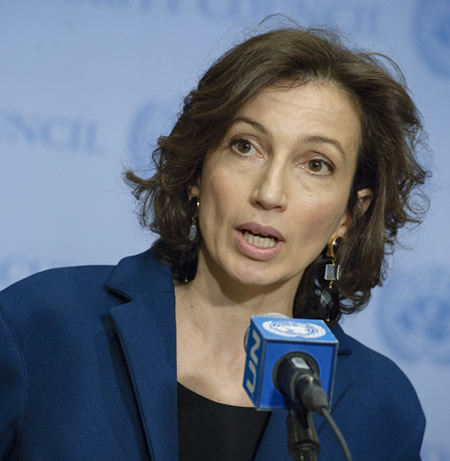
Photo: Audrey Azoulay, the newly appointed Director-General of UNESCO. Here she is seen speaking to journalists at the United Nations when she was the Minister for Culture and Communication of France. 24 March 2017. United Nations, New York. UN Photo/Manuel Elias.
The General Conference of UNESCO has appointed Audrey Azoulay (France) to the post of Director-General of the Organization. Ms Azoulay was nominated on 13 October to take the place of outgoing Director-General Irina Bokova (Bulgaria) by UNESCO’s Executive Board.
The President of the 39th session of the General Conference Zohour Alaoui, congratulated the new Director-General at the end of a vote that endorsed the choice of the Executive Board.
“I now think of all the people I met in recent months, or had met in my various professional capacities, who have great expectations from UNESCO,” declared Ms Azoulay to the General Conference. “I think of UNESCO’s mandate, which is strikingly modern. I think of all of you who are aware of the difficulties of the Organization but who know that it is irreplaceable, that it is essential, in facing current global challenges and who aspire to the unity and serenity necessary to let it exercise its mandate to best effect.”
Ms Azoulay was France’s Minister of Culture and Communication from February 2016 to May 2017. She has occupied senior positions in France’s public broadcasting sector and then served as rapporteur to France’s public auditing authority, the Cour des comptes, and as a European Commission legislative expert on issues of culture and the media.
Ms Azoulay served France’s National Cinema Centre (CNC), first as Deputy Audiovisual Director, then as Director of Financial and Legal Affairs, and finally as Deputy Director-General. She is a graduate of the Ecole Nationale d’Administration and the Paris Institut d’études politiques. Ms Azoulay also holds a Masters degree in Business Administration from the University of Lancaster (UK).
Ms Azoulay is the 11th Director-General of UNESCO and the second woman to occupy this position. She will take office on 15 November.
|GlobalGiants.Com|
Madame Audrey Azoulay, le monde attend une grande UNESCO sous votre direction.
— Surender Hastir (@SurenderHastir) November 14, 2017
Edited & Posted by Editor | 10:43 AM | Link to this Post
November 7, 2017
Cultural Rights of Women — UN Special Rapporteur Briefs Journalists
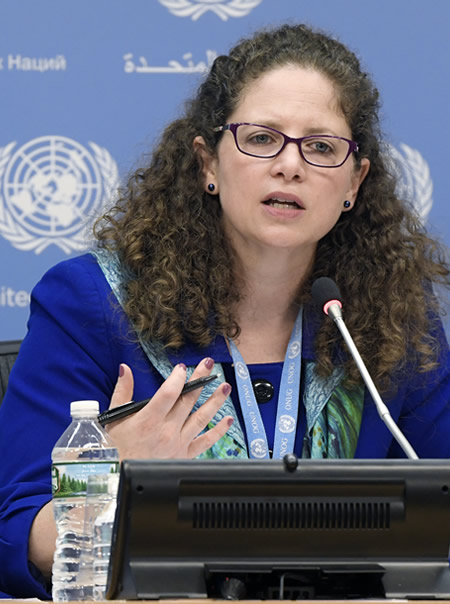
Photo: Karima Bennoune, UN Special Rapporteur in the field of Cultural Rights, briefs journalists on Cultural Rights of Women. 25 October 2017. United Nations, New York. UN Photo/Evan Schneider.
|GlobalGiants.Com|

“Without vanity, without coquetry, without curiosity, in a word, without the fall, woman would not be woman. Much of her grace is in her frailty.”
— Victor Hugo.
“A beautiful woman who lacks discretion is like a gold ring in a pig’s snout (nose).”
— The Holy Bible: Proverbs of Solomon 11:22.
“A diligent wife with strength of character is the crown of her husband, but the wife who disgraces him is like bone cancer.”
— The Holy Bible: Proverbs of Solomon 12:4.
“For the lips of a loose woman drip honey, and her speech is smoother than oil; But in the end she is as bitter as poison, as dangerous as a double-edged sword.”
— The Holy Bible: Proverbs of Solomon 5:3-4.
“He’s mad that trusts in the tameness of a wolf, a horse’s health, a boy’s love, or a whore’s oath.”
— William Shakespeare: King Lear, Act 3, Scene 6.
Edited & Posted by Editor | 3:23 AM | Link to this Post
November 1, 2017
UN Secretary-General Meets President of International Criminal Court
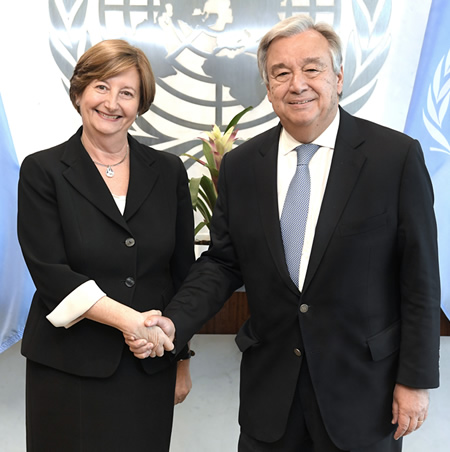
Photo: UN Secretary-General, António Guterres (right), meets with Silvia Fernández de Gurmendi, President of the International Criminal Court (ICC). 30 October 2017. United Nations, New York. UN Photo/Evan Schneider.
The International Criminal Court (ICC) [Not to be confused with the International Court of Justice (ICJ)] is an intergovernmental organization that sits in The Hague in the Netherlands. The ICC is intended to complement existing national judicial systems. It exercises its jurisdiction only when certain conditions are met, such as when national courts are unwilling or unable to prosecute criminals.
|GlobalGiants.Com|
Edited & Posted by Editor | 4:24 PM | Link to this Post
October 31, 2017
64 Cities join the UNESCO Creative Cities Network. Mumbai Misses the Shot!
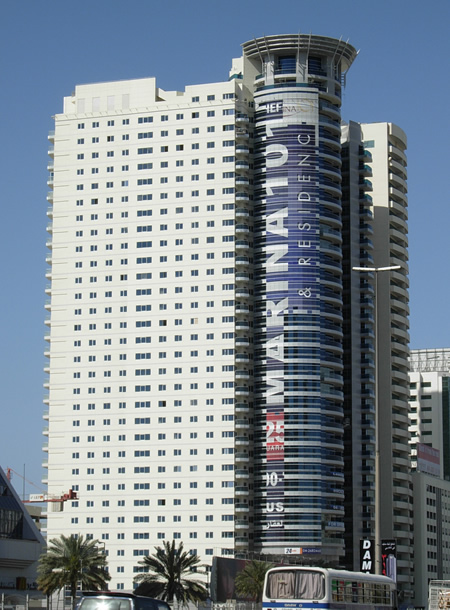
Photo: A building in Dubai. Dubai has just been designated UNESCO Creative City of Design. Image Credit: Xiquinho Silva.
Paris, France, 31 October 2017 — 64 cities from 44 countries have been designated as UNESCO Creative Cities by the UNESCO Director-General, Irina Bokova. They join a Network at the frontline of UNESCO’s efforts to foster innovation and creativity as key drivers for a more sustainable and inclusive urban development. This network attracts growing interest from local authorities.
“These new designations showcase an enhanced diversity in city profiles and geographical balance, with 19 cities from countries not previously represented in the Network” declared the Director-General. She added, “The cooperation framework proposed to foster candidate cities from the Africa region - a UNESCO Global Priority - has been a true success with 9 African cities now joining the Network.”
The new 64 UNESCO Creative Cities are:
- Alba (Italy) - Gastronomy
- Almaty (Kazakhstan) - Music
- Amarante (Portugal) - Music
- Auckland (New Zealand) - Music
- Baguio City (Philippines) - Crafts and Folk Art
- Barcelos (Portugal) - Crafts and Folk Art
- Braga (Portugal) - Media Arts
- Brasilia (Brazil) - Design
- Bristol (United Kingdom of Great Britain and Northern Ireland) - Film
- Brno (Czechia) - Music
- Bucheon (Republic of Korea) - Literature
- Buenaventura (Colombia) - Gastronomy
- Cairo (Egypt) - Crafts and Folk Art
- Cape Town (South Africa) - Design
- Carrara (Italy) - Crafts and Folk Art
- Changsha (China) - Media Arts
- Chennai (India) - Music
- Chiang Mai (Thailand) - Crafts and Folk Art
- Chordeleg (Ecuador) - Crafts and Folk Art
- Cochabamba (Bolivia [Plurinational State of]) - Gastronomy
- Daegu Metropolitan City (Republic of Korea) - Music
- Dubai (United Arab Emirates) - Design
- Durban (South Africa) - Literature
- Frutillar (Chile) - Music
- Gabrovo (Bulgaria) - Crafts and Folk Art
- [City of] Greater Geelong (Australia) - Design
- Guadalajara (Mexico) - Media Arts
- Hatay Metropolitan Municipality (Turkey) - Gastronomy
- Istanbul (Turkey) - Design
- João Pessoa (Brazil) - Crafts and Folk Art
- Kansas City (United States of America) - Music
- Kolding (Denmark) - Design
- Kortrijk (Belgium) - Design
- Košice (Slovakia) - Media Arts
- Kütahya (Turkey) - Crafts and Folk Art
- Lillehammer (Norway) - Literature
- Limoges (France) - Crafts and Folk Art
- Łódź (Poland) - Film
- Macao Special Administrative Region, China (Associate Member, UNESCO) - Gastronomy
- Madaba (Jordan) - Crafts and Folk Art
- Manchester (United Kingdom of Great Britain and Northern Ireland) - Literature
- Mexico City (Mexico) - Design
- Milan (Italy) - Literature
- Morelia (Mexico) - Music
- Norrköping (Sweden) - Music
- Ouagadougou (Burkina Faso) - Crafts and Folk Art
- Panama City (Panama) - Gastronomy
- Paraty (Brazil) - Gastronomy
- Pesaro (Italy) - Music
- Porto-Novo (Benin) - Crafts and Folk Art
- Praia (Cabo Verde) - Music
- Qingdao (China) - Film
- Québec City (Canada) - Literature
- San Antonio (United States of America) - Gastronomy
- Seattle (United States of America) - Literature
- Sheki (Azerbaijan) - Crafts and Folk Art
- Sokodé (Togo) - Crafts and Folk Art
- Terrassa (Spain) - Film
- Tétouan (Morocco) - Crafts and Folk Art
- Toronto (Canada) - Media Arts
- Tunis (Tunisia) - Crafts and Folk Art
- Utrecht (Netherlands) - Literature
- Wuhan (China) - Design
- Yamagata City (Japan) - Film
Since 2004, the UNESCO Creative Cities Network highlights its members’ creativity within seven fields: Crafts and Folk Art, Design, Film, Gastronomy, Literature, Media Arts and Music. It now counts a total of 180 cities in 72 countries.
While differing geographically, demographically or economically, all Creative Cities commit to develop and exchange innovative best practices to promote creative industries, strengthen participation in cultural life, and integrate culture into sustainable urban development policies.

Photo: Mumbai, a strong contender for the prestigious “UNESCO Creative City for Films” designation, missed the shot by failing to submit its application in time. Here, Mumbai actress, Puja Gupta, attends the “All Is Lost” Premiere during the 66th Annual Cannes Film Festival at Grand Theatre Lumiere on May 22, 2013 in Cannes, France. Photo by Ian Gavan/WireImage for Electrolux. © 2013 WireImage.
From India, Chennai has been designated as UNESCO Creative City of Music. Mumbai, a strong contender for the prestigious “UNESCO Creative City of Films” designation, has missed out on its chance.
The Ministry of Culture, Government of India, had proposed to send dossiers for Chennai (for music), and Mumbai (for films). While the dossier to support Chennai was submitted by the government in time, dossier for Mumbai could not be sent ahead of the June 16 deadline set by the UNESCO Secretariat.
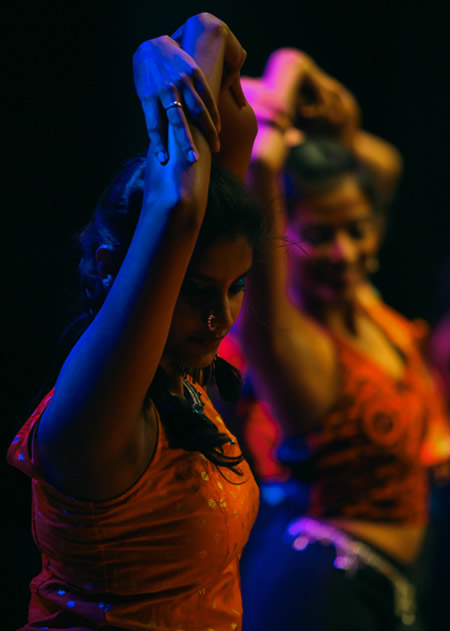
Photo: A Music and Dance event in Chennai. Image Credit: TEDx Chennai.
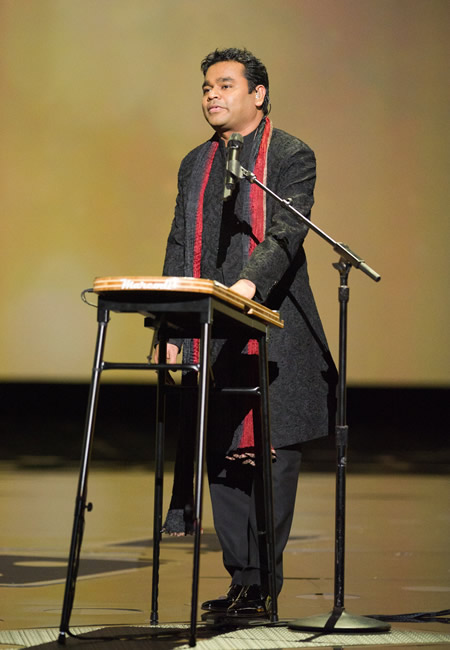
Photo: A. R. Rahman, renowned musician from Chennai, Oscar nominee for Achievement in Music Written for Motion Pictures (Original Score) and for Achievement in Music Written for Motion Pictures (Original Song), performs during the live ABC Television Network broadcast of the 83rd Annual Academy Awards from the Kodak Theatre in Hollywood, CA, Sunday, February 27, 2011. Photographer: Michael Yada. Image provided by and copyright © The Academy of Motion Picture Arts and Sciences.
The Prime Minister of India, Narendra Modi, has congratulated people of Chennai on inclusion of Chennai in the UNESCO creative Cities Network.
The Prime Minister said, “Congratulations to the people of Chennai on the city’s inclusion in the UNESCO Creative Cities Network for its rich musical tradition. Chennai’s contribution to our rich culture is precious. This is a proud moment for India.”
|GlobalGiants.Com|
Congratulations to the people of Chennai on the city’s inclusion in the @UNESCO Creative Cities Network for its rich musical tradition. Chennai’s contribution to our rich culture is precious. This is a proud moment for India: PM @narendramodi
— PMO India (@PMOIndia) November 8, 2017
#Chennai is the third city, after Varanasi and Jaipur, from #India to join the #UNESCO Creative Cities Network. More details at: https://t.co/Fgnw7ZHFMd pic.twitter.com/puhyyxolBv
— UNESCO New Delhi (@UNESCO_NDL) November 14, 2017
Edited & Posted by Editor | 4:03 PM | Link to this Post
October 28, 2017
International Press Institute (IPI) urges India Government to withdraw a Controversial Ordinance
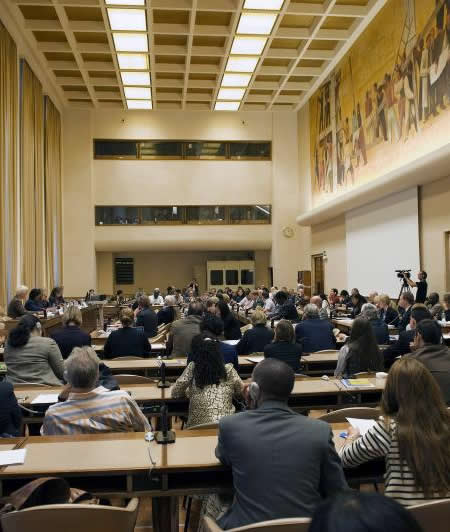
Photo: Participants at an event to mark the World Press Freedom Day at Palais des Nations, United Nations Office at Geneva, Switzerland. United Nations, Geneva. UN Photo/Jean-Marc Ferré.
Vienna, Austria, Oct 27, 2017 — The government of the Indian state of Rajasthan must reverse an ordinance, which, in the absence of a government-sanctioned criminal investigation, bars the media from covering allegations of wrongdoing involving public officials. This was stated today by the International Press Institute (IPI) in letters sent to Indian Prime Minister Narendra Modi and Rajasthan Chief Minister Vasundhara Raje.
The ordinance requires courts and law enforcement agencies to obtain government approval before investigating public officials, judges, and magistrates for alleged wrongdoing committed in the course of carrying out public duties.
Here are the excerpts from the letter —
Oct 27, 2017
Mr. Narendra Modi
Prime Minister of India
South Block
New Delhi
India.
Dear Prime Minister,
The International Press Institute (IPI) is deeply concerned by the issuance of an ordinance under the Constitution of India by the Governor of the State of Rajasthan, amending the Criminal Laws Act of the State, on the advice of the Government of Rajasthan.
The ordinance, which claims to protect public servants, judges and magistrates facing “false” allegations of corruption and criminality, prohibits the media from publishing any report on such allegations, even when accompanied by evidence, until an appropriate authority of the Government has considered the complaints and given sanction for the initiation of prosecution proceedings.
The concerned authority has been given a time limit of six months to take a decision on whether to prosecute or not to prosecute. Until then, media outlets are completely prohibited from writing any details on the allegations ……………..
IPI strongly condemns the gagging of the press through this ordinance. The measure, signed by the Governor of Rajasthan on the advice of the Government of Rajasthan, violates Art. 19 of the Indian Constitution, which enshrines freedom of expression …………….
Eminent jurists, journalists and journalist organisations as well as senior political leaders have strongly opposed the ordinance and have called for its immediate withdrawal …………..
Mr. Prime Minister, you recounted recently how you had participated in the political struggle against the censorship of newspapers during the Emergency which was in force in India between 1975 and 1977. In this same spirit, IPI calls upon you to intervene with the Government of Rajasthan, and direct the state Government to immediately negate the ordinance through the Constitutional route, and withdraw the bill now under consideration by the State Assembly.
Such an action would demonstrate your commitment to freedom of the press, and would ensure that acts of corruption and criminality are not shielded behind the curtain of censorship.
Yours sincerely,
Barbara Trionfi
Executive Director
International Press Institute
……………………………………………………….
|GlobalGiants.Com|
The editor of GlobalGiants.Com, incidentally, is a member of the International Press Institute (IPI).
Edited & Posted by Editor | 2:45 AM | Link to this Post
October 14, 2017
“Girls Speak Out”
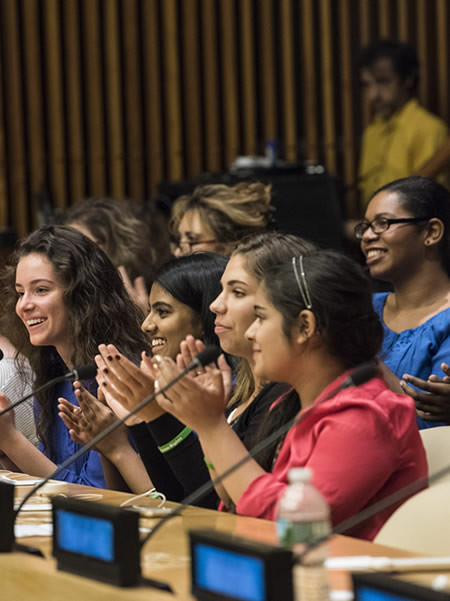
Photo: Participants at an event entitled, “Girls Speak Out”, marking the International Day of the Girl Child (11 October). The event was co-organized by the Permanent Missions of Canada, Peru, and Turkey, and the NGO Working Group on Girls. 11 October 2017. United Nations, New York. UN Photo/Kim Haughton.
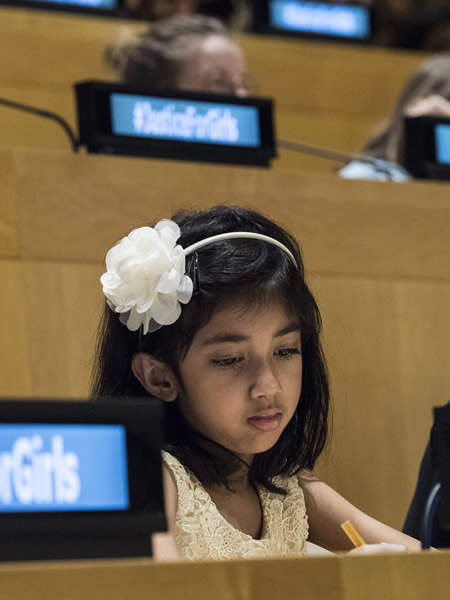
Photo: A young attendee at an event entitled, “Girls Speak Out”, on the occasion of the International Day of the Girl Child (11 October). The event was co-organized by the Permanent Missions of Canada, Peru, and Turkey, and the NGO Working Group on Girls. 11 October 2017. United Nations, New York. UN Photo/Kim Haughton.
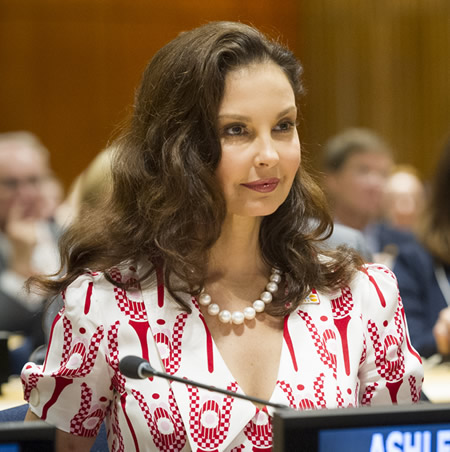
Photo: Ashley Judd, Goodwill Ambassador for the United Nations Population Fund (UNFPA), speaks at the high-level launch of the EU-UN Spotlight Initiative for the elimination of violence against women and girls. The event was held on the margins of the General Assembly’s annual general debate. 20 September 2017. United Nations, New York. UN Photo/Rick Bajornas.
|GlobalGiants.Com|
Edited & Posted by Editor | 10:03 AM | Link to this Post
October 9, 2017
India Finance Minister Arun Jaitley To Speak At Harvard University
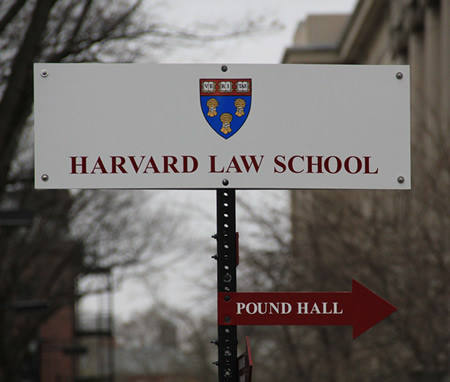
Photo: A Harvard Law School Signboard. Image Credit: Ryan Ward.
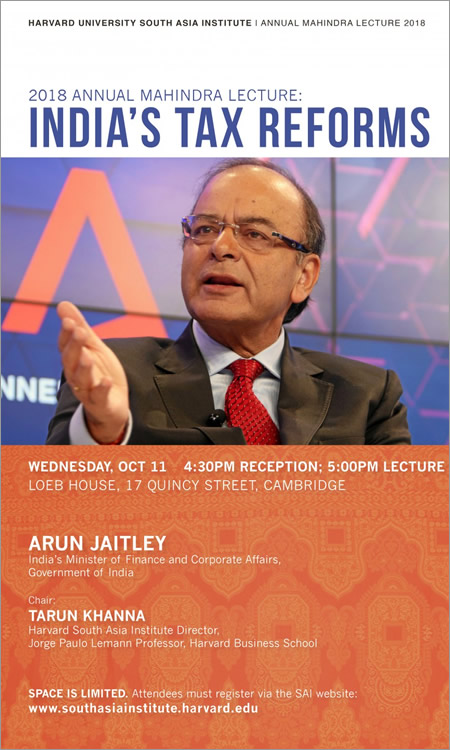
Photo: Event Announcement, Arun Jaitley’s lecture at the South Asia Institute, Harvard University.
WASHINGTON: India’s Finance Minister, Arun Jaitley will address students of the prestigious Harvard University on October 12.
At Harvard, on October 12, the Finance Minister would deliver the ‘Mahindra Lecture’ in honour of late Harish C Mahindra, a distinguished alumnus of Harvard College and a visionary leader of business and industry in India, the South Asia Institute of Harvard University said in an announcement.
On the First Leg of his US visit, Jaitley will arrive in New York on the morning on 9th October, 2017. His major engagements during his one day stay at New York include Meeting with the Investors in partnership with Bank of America and Confederation of Indian Industries (CII). Thereafter, he will participate in the Roundtable Meeting of CEOs of USIBC-CII.
Next day, i.e., Tuesday, 10th October, 2017, he will deliver a Lecture on “FDI: Achievements and Challenges” at Columbia University. In the evening, he will leave for Boston.
On Wednesday, 11th October, 2017, Mr. Jaitley will participate in the Roundtable Investment Meet being organised in Boston in collaboration with NIIF, USISPF and FICCI on the subject of “Indian Economy - The Road Ahead”.
Later in the evening, he will deliver a Lecture on India’s Tax Reforms at the South Asia Institute, Harvard University.
On the morning of Thursday, the 12th October, 2017, the Finance Minister will leave for Washington D.C. to participate in the Annual Meetings of the World Bank and International Monetary Fund (IMF).
According to political analyst, Nikhila Natarajan, Jaitley would be visiting two “Ivy League” colleges - Columbia and Harvard.
“Yale, Harvard, University of Pennsylvania, Brown, Dartmouth, Cornell, Columbia and Princeton,” she explains, “form the league of eight, called ‘Ivy League’, which embraces a wide sweep of connotations, including but not limited to academic excellence, selectivity in admissions, social elitism, and a common high-water mark for scholarship and athletics.”
|GlobalGiants.Com|
Edited & Posted by Editor | 3:49 PM | Link to this Post
October 7, 2017
Conversation with Author of “Modern Slavery”
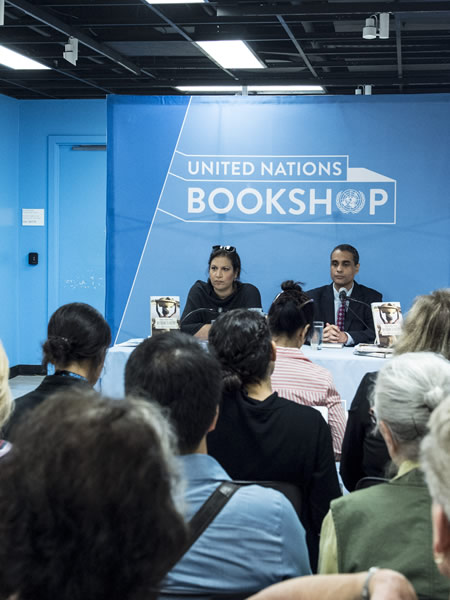
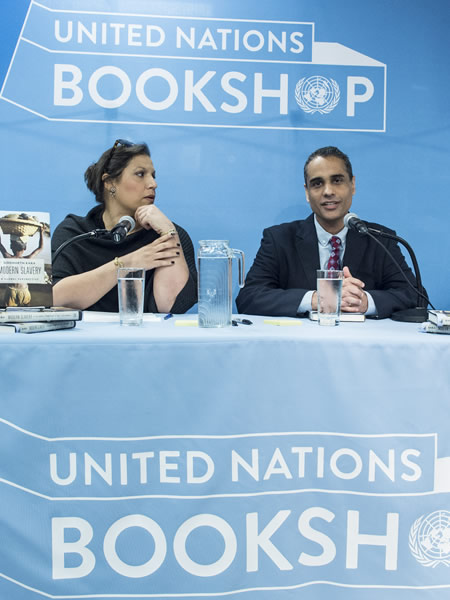
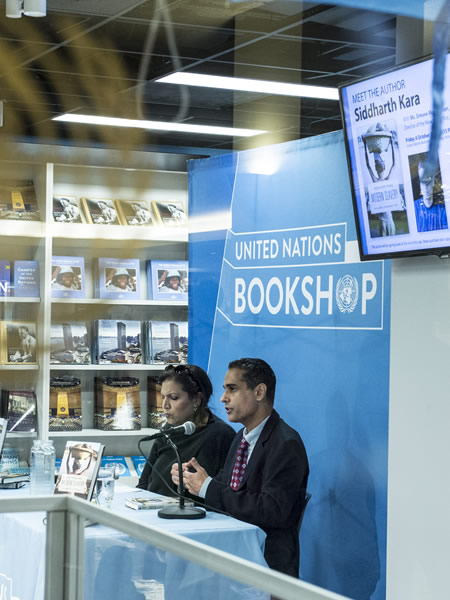
Photos: Siddharth Kara (right), author of the book “Modern Slavery”, addresses an event introducing him to readers at the UN Bookshop. At his side is Simone Monasebian, New York Director of the UN Office on Drugs and Crime (UNODC). 06 October 2017. United Nations, New York. UN Photos/Kim Haughton.
Kara’s book has been recommended by the Under-Secretary-General of the United Nations and head of the United Nations Office on Drugs and Crime. It has been lauded by academics, policy-makers and the press, with the Financial Times describing it as an “eloquent and campaigning book” and “sex trafficking and slavery” experts heralding it as “groundbreaking” and the “best book yet on the enduring problem of modern-day slavery.” The book has become a go-to resource for policy makers, foundations, and NGO’s around the world.
Siddharth Kara is an Adjunct Lecturer in Public Policy and Director of the Program on Human Trafficking and Modern Slavery at the Kennedy School of Government at Harvard University.
|GlobalGiants.Com|
Edited & Posted by Editor | 1:59 AM | Link to this Post
October 6, 2017
International Campaign to Abolish Nuclear Weapons (ICAN) awarded the Nobel Peace Prize for 2017
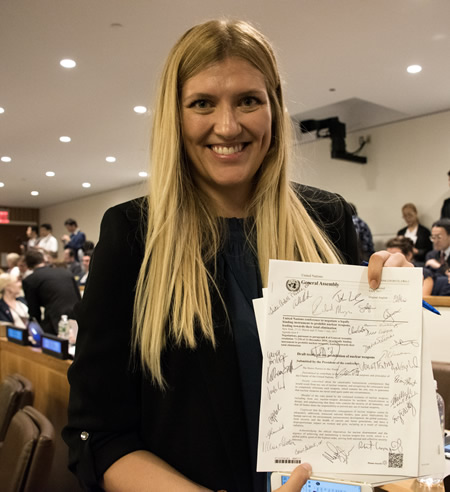
Photo: Beatrice Fihn, Executive Director, International Campaign to Abolish Nuclear Weapons (ICAN), with signed “Draft treaty on the prohibition of nuclear weapons” - 7th July 2017. Photographer: Clare Conboy. Image provided by & Copyright © ICAN.
Oslo, 6 October 2017 — The Norwegian Nobel Committee has decided to award the Nobel Peace Prize for 2017 to the International Campaign to Abolish Nuclear Weapons (ICAN). “The organization is receiving the award for its work to draw attention to the catastrophic humanitarian consequences of any use of nuclear weapons and for its ground-breaking efforts to achieve a treaty-based prohibition of such weapons,” the committee announced.
“We live in a world where the risk of nuclear weapons being used is greater than it has been for a long time. Some states are modernizing their nuclear arsenals, and there is a real danger that more countries will try to procure nuclear weapons, as exemplified by North Korea. Nuclear weapons pose a constant threat to humanity and all life on earth. Through binding international agreements, the international community has previously adopted prohibitions against land mines, cluster munitions and biological and chemical weapons. Nuclear weapons are even more destructive, but have not yet been made the object of a similar international legal prohibition.
“Through its work, ICAN has helped to fill this legal gap. An important argument in the rationale for prohibiting nuclear weapons is the unacceptable human suffering that a nuclear war will cause. ICAN is a coalition of non-governmental organizations from around 100 different countries around the globe. The coalition has been a driving force in prevailing upon the world’s nations to pledge to cooperate with all relevant stakeholders in efforts to stigmatise, prohibit and eliminate nuclear weapons. To date, 108 states have made such a commitment, known as the Humanitarian Pledge.
“Furthermore, ICAN has been the leading civil society actor in the endeavour to achieve a prohibition of nuclear weapons under international law. On 7 July 2017, 122 of the UN member states acceded to the Treaty on the Prohibition of Nuclear Weapons. As soon as the treaty has been ratified by 50 states, the ban on nuclear weapons will enter into force and will be binding under international law for all the countries that are party to the treaty.
“The Norwegian Nobel Committee is aware that an international legal prohibition will not in itself eliminate a single nuclear weapon, and that so far neither the states that already have nuclear weapons nor their closest allies support the nuclear weapon ban treaty. The Committee wishes to emphasize that the next steps towards attaining a world free of nuclear weapons must involve the nuclear-armed states. This year’s Peace Prize is therefore also a call upon these states to initiate serious negotiations with a view to the gradual, balanced and carefully monitored elimination of the almost 15,000 nuclear weapons in the world. Five of the states that currently have nuclear weapons - the USA, Russia, the United Kingdom, France and China - have already committed to this objective through their accession to the Treaty on the Non-Proliferation of Nuclear Weapons of 1970. The Non-Proliferation Treaty will remain the primary international legal instrument for promoting nuclear disarmament and preventing the further spread of such weapons.
“It is now 71 years since the UN General Assembly, in its very first resolution, advocated the importance of nuclear disarmament and a nuclear weapon-free world. With this year’s award, the Norwegian Nobel Committee wishes to pay tribute to ICAN for giving new momentum to the efforts to achieve this goal.
“It is the firm conviction of the Norwegian Nobel Committee that ICAN, more than anyone else, has in the past year given the efforts to achieve a world without nuclear weapons a new direction and new vigour,” the Norwegian Nobel Committee stated in its announcement.
|GlobalGiants.Com|
Edited & Posted by Editor | 8:31 AM | Link to this Post
October 2, 2017
President of UN General Assembly Becomes International Gender Champion
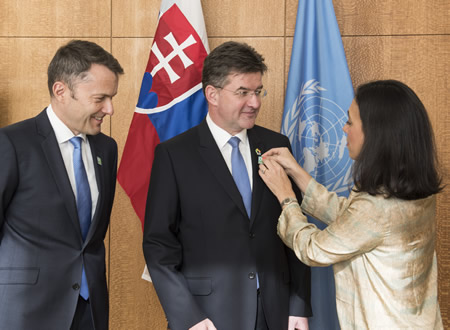
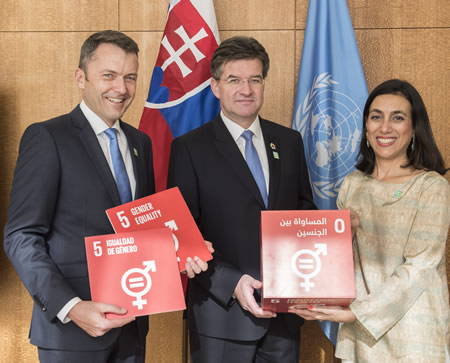
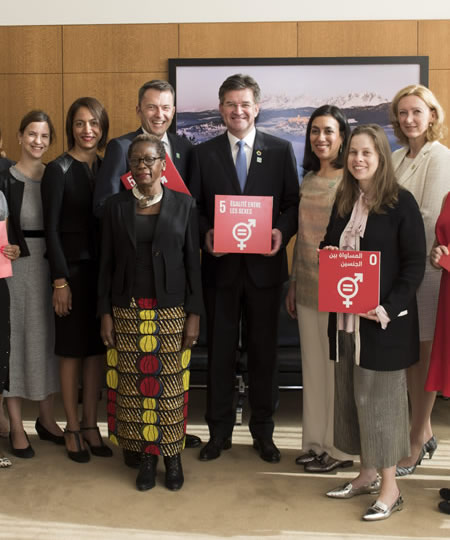
Photos: Miroslav Lajčák, President of the seventy-second session of the UN General Assembly, joined the growing list of International Gender Champions (IGC) at a special ceremony held in his office. IGC is a network of senior leaders of the UN Secretariat, funds, programmes and agencies, Member States, local governments, private sector leaders and civil society striving to achieve gender equality by breaking down gender barriers in a very practical way.
Mr. Lajčák (centre) on the occasion in his office with Laura Elena Flores Herrera (right), Permanent Representative of Panama to the UN; and Jürg Lauber, Permanent Representative of Switzerland, both of whom are also Champions. 29 September 2017. United Nations, New York. UN Photos/Kim Haughton.
|GlobalGiants.Com|
Edited & Posted by Editor | 5:25 AM | Link to this Post
September 28, 2017
‘Time to Stamp Out Human Trafficking,’ says UN Chief; United Nations Pledges Action to Eradicate ‘Heinous Crime’ with Tailored, Effective, Multilateral Efforts to Protect the Victims and Prosecute the Perpetrators
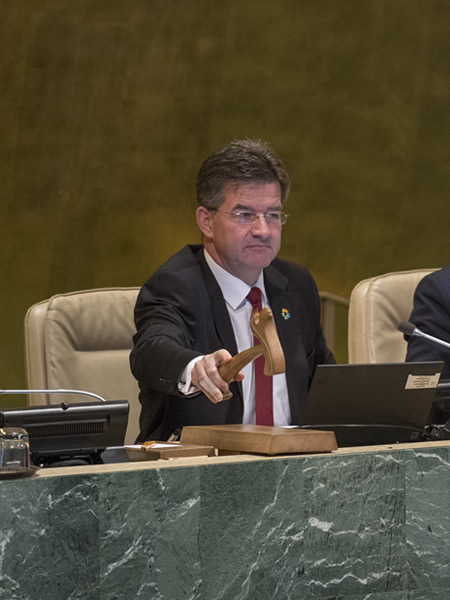
Photo: Miroslav Lajčák, President of the seventy-second session of the UN General Assembly, chairs the Assembly’s high-level meeting to appraise progress achieved in the implementation of the United Nations Global Plan of Action to Combat Trafficking in Persons. 27 September 2017. United Nations, New York. UN Photo/Cia Pak.
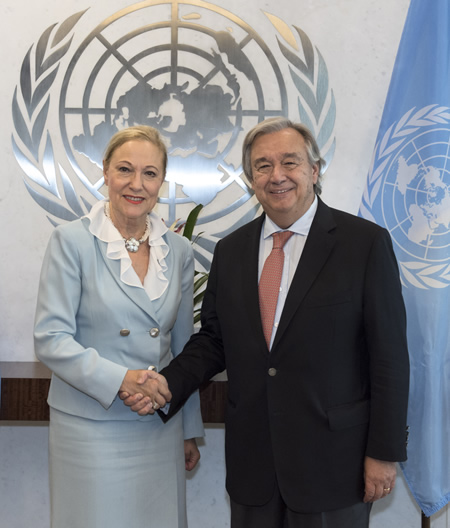
Photo: UN Secretary-General António Guterres (right) meets with Benita Ferrero-Waldner, Chair of the Board of the United Nations Voluntary Trust Fund for Victims of Trafficking in Persons. 27 September 2017. United Nations, New York. UN Photo/Kim Haughton.
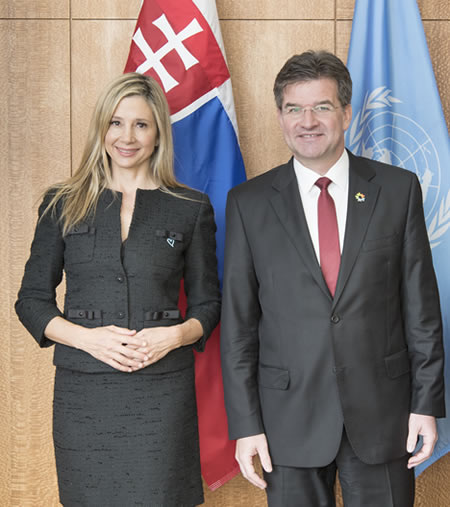
Photo: Miroslav Lajčák, President of the seventy-second session of the UN General Assembly, meets with Mira Sorvino (left), UNODC (UN Office on Drugs and Crime) Goodwill Ambassador for Global Fight against Human Trafficking. 27 September 2017. United Nations, New York. UN Photo/Mark Garten.
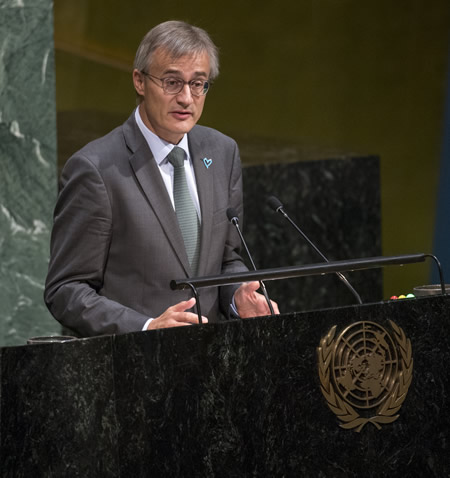
Photo: Félix Braz, Minister of Justice of Luxembourg, addresses the UN General Assembly high-level meeting to appraise progress achieved in the implementation of the United Nations Global Plan of Action to Combat Trafficking in Persons. 27 September 2017. United Nations, New York. UN Photo/Cia Pak.
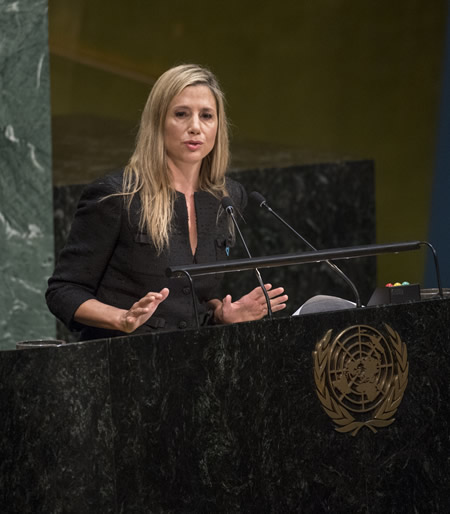
Photo: Mira Sorvino, Academy Award-winning actress and Goodwill Ambassador for the United Nations Office on Drugs and Crime (UNODC), addresses the high-level meeting of the UN General Assembly on the appraisal of the UN Global Plan of Action to Combat Trafficking in Persons. 27 September 2017. United Nations, New York. UN Photo/Cia Pak.
United Nations, 27 September 2017 - With tens of millions of human trafficking victims worldwide, “now is the time to stand together and stamp out this abominable practice,” Secretary-General António Guterres told a high-level meeting at which Member States adopted a political Declaration reaffirming their commitment to implement a United Nations action plan to end the scourge.
“Human trafficking is all around us, in all regions of the world,” said Mr. Guterres, referring to such practices as “Forced Labour” and “Sexual Servitude” in different forms and manifestations.
In the Declaration, adopted without a vote, UN Member States demonstrated their strong political will to take decisive concerted action to end the heinous crime.
“As millions of children, women and men spill out of their countries towards safety, they find themselves at the mercy of merciless people,” Mr. Guterres said.
These criminal networks are global, well-organized, technologically savvy, and highly proficient in taking advantage of gaps in governance and weaknesses in institutions, he added.
Fighting human trafficking requires greater use of relevant instruments, including the UN conventions against transnational organized crime and against corruption, he said.
Also addressing the meeting, Yuri Fedotov, Executive Director of the UN Office on Drugs and Crime (UNODC), said “this appraisal and the adoption of the political Declaration can help us take this commitment forward and sharpen responses to an odious crime that continues to exploit and victimize the most vulnerable, in all parts of the world.”
To build a robust evidence base, UNODC is currently working with the academic community to develop innovative methodologies to measure the size and scope of the trafficking problem, he added.
General Assembly President Miroslav Lajčák also addressed the meeting, as did Ms. Mira Sorvino, UNODC Goodwill Ambassador for the global fight against human trafficking and Grizelda Grootboom, a civil society representative and victim of human trafficking.
The high-level meeting was addressed by the representatives of Jamaica, Sweden, Italy, Nigeria, Botswana, Zambia, United States, Cuba, Morocco, Brazil, Denmark, Slovenia, Myanmar, Austria, Portugal, Mexico, Philippines, Peru, Paraguay, India, Cameroon, Bahamas, Republic of Korea, Germany, Pakistan, Guatemala, Libya, Argentina, Colombia, Kenya, Canada, Azerbaijan, Latvia, Finland, Liechtenstein, Japan, Cabo Verde, Chile, Costa Rica, Ecuador, Mongolia, Cyprus, Bulgaria, Saudi Arabia, United Republic of Tanzania, Uruguay, Switzerland, Hungary, Ireland, Georgia, Kazakhstan, Honduras, Viet Nam, El Salvador, Bahrain, Maldives, Iceland, Burkina Faso, Rwanda, Bangladesh, China, Iraq, Jordan, Kuwait, Saint Vincent and Grenadines and Spain.
The speakers called for tailored, effective, multilateral efforts to protect the victims and prosecute the perpetrators.
|GlobalGiants.Com|
Edited & Posted by Editor | 4:46 PM | Link to this Post
September 27, 2017
General Debate of the UN General Assembly concludes amid Clarion Calls for Diplomacy and Reform of United Nations to create More Equitable World Order
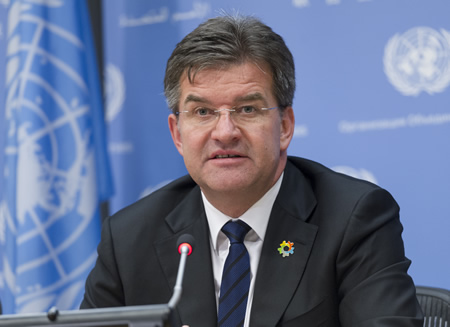
Photo: Miroslav Lajčák (left), President of the seventy-second session of the General Assembly, briefs journalists on the outcomes and achievements of the Assembly’s annual general debate, which took place from 19 to 25 September. 26 September 2017. United Nations, New York. UN Photo/Rick Bajornas.
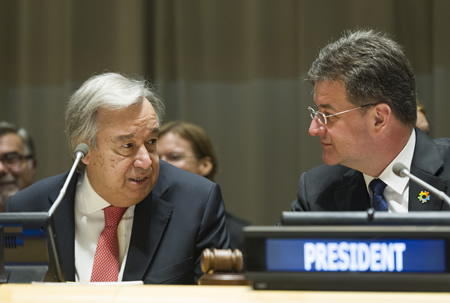
Photo: Miroslav Lajčák (right), President of the seventy-second session of the General Assembly, opens the high-level plenary meeting commemorating and promoting the International Day for the Total Elimination of Nuclear Weapons. Secretary-General António Guterres is on the left. 26 September 2017. United Nations, New York. UN Photo/Rick Bajornas.
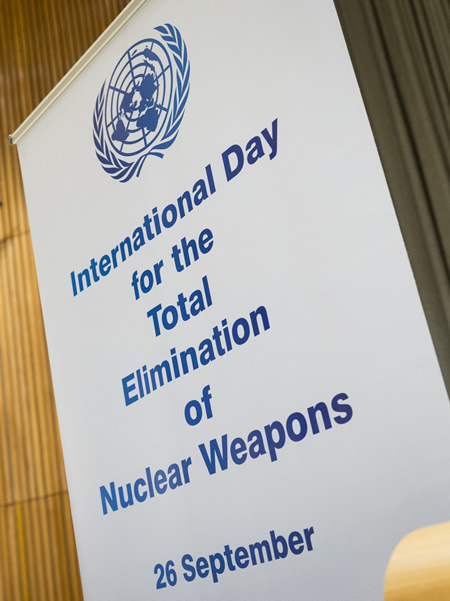
Photo: The UN General Assembly convenes a high-level meeting to commemorate and promote the International Day for the Total Elimination of Nuclear Weapons (26 September). 26 September 2017. United Nations, New York. UN Photo/Rick Bajornas.

Photo: Mia, a member of the UN Security and Safety K-9 (Canine) Unit for explosives detection, at work with her handler in the Secretariat Building of UN headquarters. UN Photo/Mark Garten. 22 September 2017. United Nations, New York.
The United Nations General Assembly has wrapped up its 72nd annual general debate with its President underscoring prevention of conflicts before they break out, support for UN peacekeeping, sustainable development, and respect for human rights and gender equality among the major priorities raised by the 196 Heads of State, Government and delegations.
“You reaffirmed your commitment to the UN. And to each other. You said we are stronger together, in a system based on dialogue and multilateralism,” President Miroslav Lajčák declared, summing up the main thrust of the debate whose theme was ‘Focusing on People - Striving for Peace and a Decent Life for All on a Sustainable Planet.’
During six days of debate, several representatives focused on the global economic and political systems — including within the United Nations — as unfair and unrepresentative, with many stressing that the Organization’s reform must include a reorientation of the Security Council’s membership.
|GlobalGiants.Com|
“Incidents should not govern policy; but, policy incidents.”
— Napoleon Bonaparte.
“The question upon which the whole future peace and policy of the world depends is this: Is the present war a struggle for a just and secure peace, or only for a new balance of power? If it be only a struggle for a new balance of power, who will guarantee, who can guarantee, the stable equilibrium of the new arrangement? … There must be, not a balance of power, but a community of power; not organized rivalries, but an organized common peace.”
— Woodrow Wilson, President of the United States from 1913 to 1921.
Edited & Posted by Editor | 7:21 AM | Link to this Post
September 19, 2017
UN General Assembly Opens Seventy-second General Debate
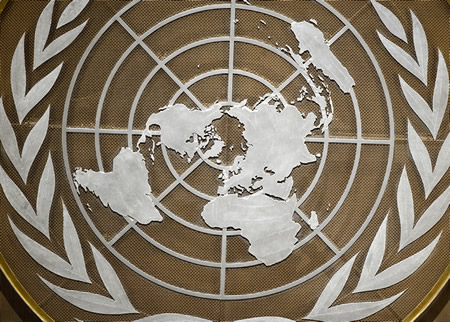
Photo: The logo of the United Nations in the General Assembly Hall, as the Assembly opens the general debate of its seventy-second regular session. 19 September 2017. United Nations, New York. UN Photo/Cia Pak.
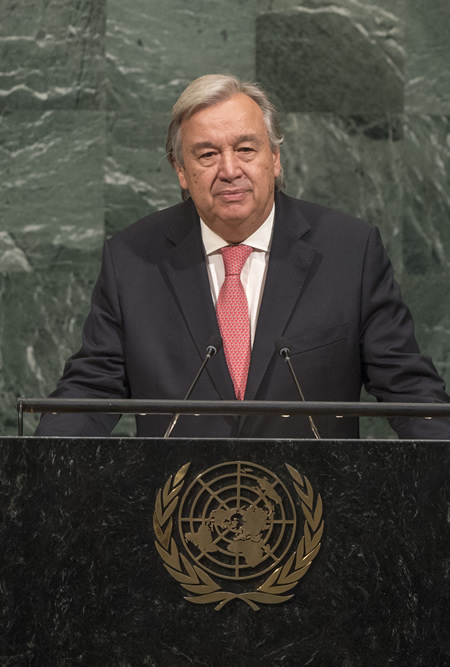
Photo: UN Secretary-General António Guterres presents his annual report on the work of the Organization at the opening of the General Assembly’s seventy-second general debate. 19 September 2017. United Nations, New York. UN Photo/Cia Pak.
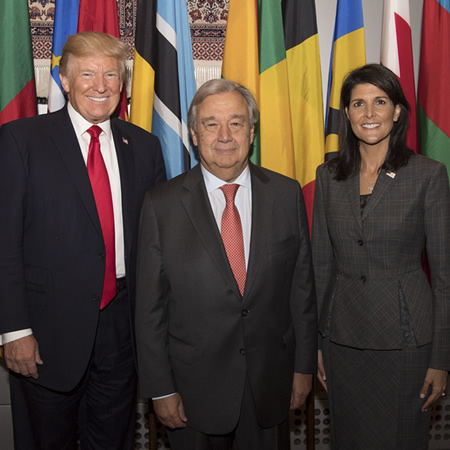
Photo: UN Secretary-General António Guterres (centre) meets with United States President Donald Trump (left). Also pictured, Nikki Haley, United States Permanent Representative to the UN. 18 September 2017. United Nations, New York. UN Photo/Eskinder Debebe.
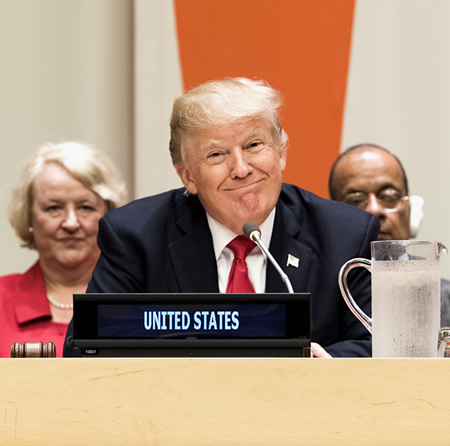
Photo: United States President Donald Trump during the high-level meeting on reform of the United Nations convened by the United States. 18 September 2017. United Nations, New York. UN Photo/Mark Garten.
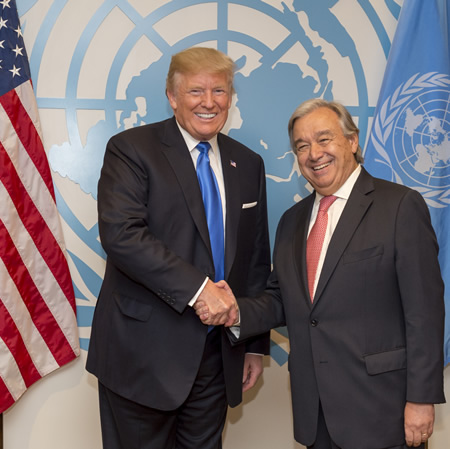
Photo: UN Secretary-General António Guterres (right) meets with United States President Donald Trump. 19 September 2017. UN Photo/Rick Bajornas.
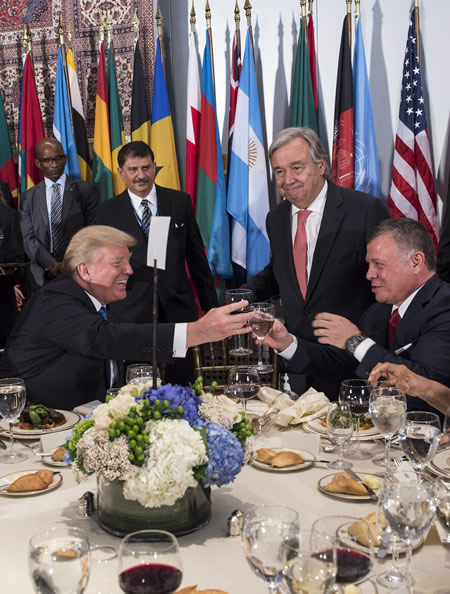
Photo: UN Secretary-General António Guterres hosted a luncheon in honour of the heads of delegations attending the general debate of the General Assembly’s seventy-second session.
United States President Donald Trump (left) shares a toast with King Abdullah II Bin Al Hussein of the Hashemite Kingdom of Jordan, as the Secretary-General (centre) looks on. 19 September 2017. United Nations, New York. UN Photo/Kim Haughton.
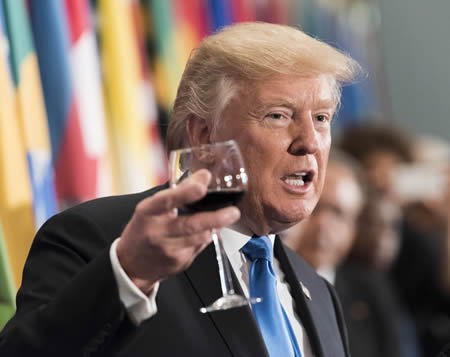
Photo: UN Secretary-General António Guterres hosted a luncheon in honour of the heads of delegations attending the general debate of the General Assembly’s seventy-second session. United States President Donald Trump offers a toast at the luncheon. 19 September 2017. United Nations, New York. UN Photo/Mark Garten.
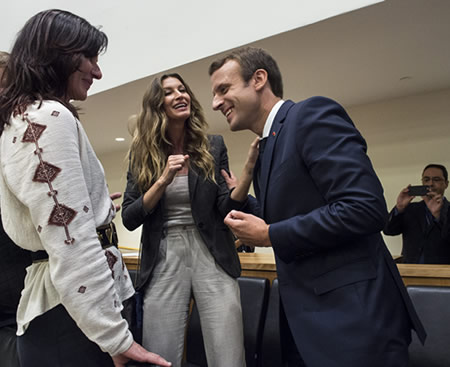
Photo: Emmanuel Macron (right), President of France, at the Summit to Launch the Global Pact for the Environment, which took place on the margins of the annual general debate of the General Assembly. 19 September 2017. United Nations, New York. UN Photo/Kim Haughton.
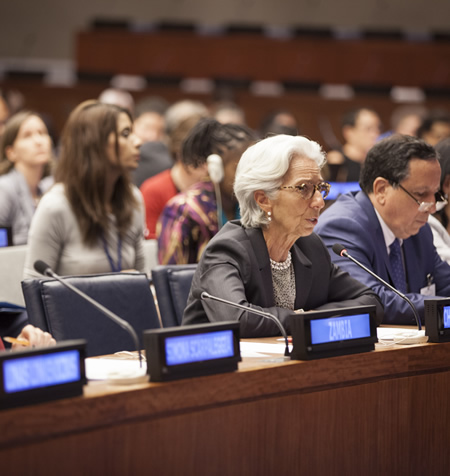
Photo: Christine Lagarde, Managing Director of the International Monetary Fund (IMF), addresses an event entitled, “Leave No One Behind: Actions and Commitments for Women’s Economic Empowerment”, which took place on the margins of the General Assembly’s annual general debate. 19 September 2017. United Nations, New York. UN Photo/Ariana Lindquist.
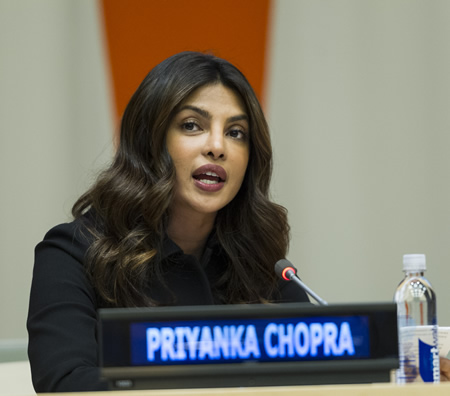
Photo: Priyanka Chopra, UNICEF Goodwill Ambassador, makes remarks during an event on “Financing the Future: Education 2030”. 20 September 2017. United Nations, New York. UN Photo/Rick Bajornas.
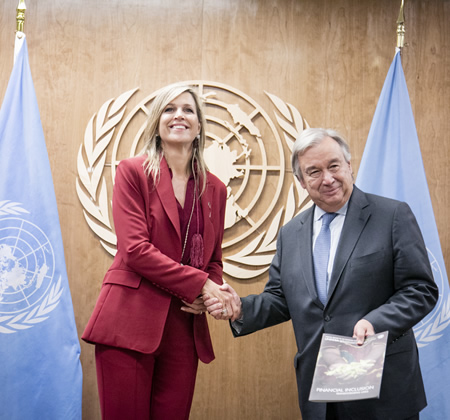
Photo: UN Secretary-General, António Guterres (right), meets with Queen Maxima of the Netherlands, his Special Advocate for Inclusive Finance for Development. 20 September 2017. United Nations, New York. UN Photo/Ariana Lindquist.
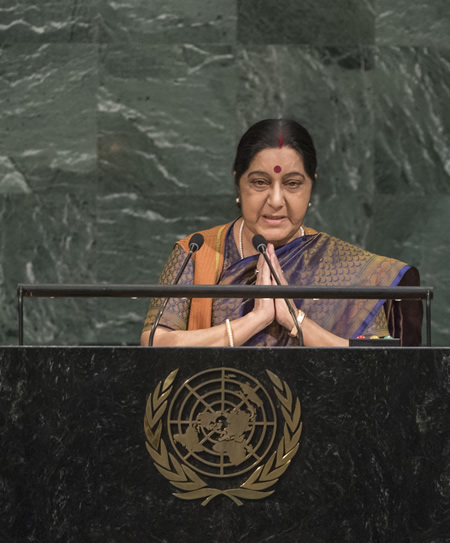
Photo: Sushma Swaraj, Minister for External Affairs of India, addresses the general debate of the General Assembly’s seventy-second session. 23 September 2017. United Nations, New York. UN Photo/Cia Pak.
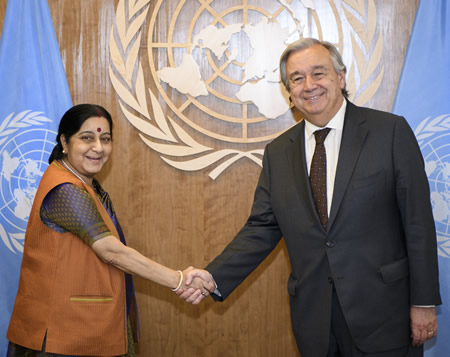
Photo: UN Secretary-General, António Guterres (right), meets with Sushma Swaraj, Minister for External Affairs of India. 23 September 2017. United Nations, New York. UN Photo/Manuel Elias.
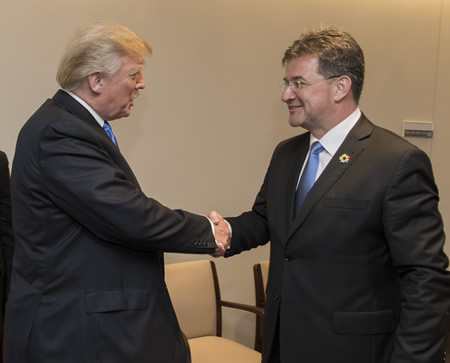
Photo: Miroslav Lajčák (right), President of the seventy-second session of the General Assembly, meets with Donald J. Trump, President of the United States of America. 19 September 2017. United Nations, New York. UN Photo/Mark Garten.
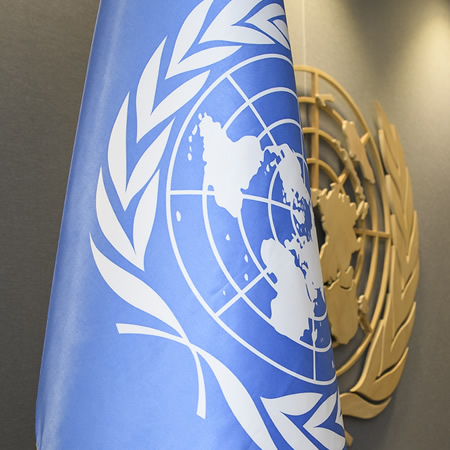
Photo: Scene at a meeting room during the general debate of the General Assembly’s seventy-second session. UN Headquarters. UN Photo/Manuel Elias. 17 September 2017. United Nations, New York.
|GlobalGiants.Com|
Edited & Posted by Editor | 2:45 PM | Link to this Post
September 15, 2017
New Wardrobe for UN Tour Guides
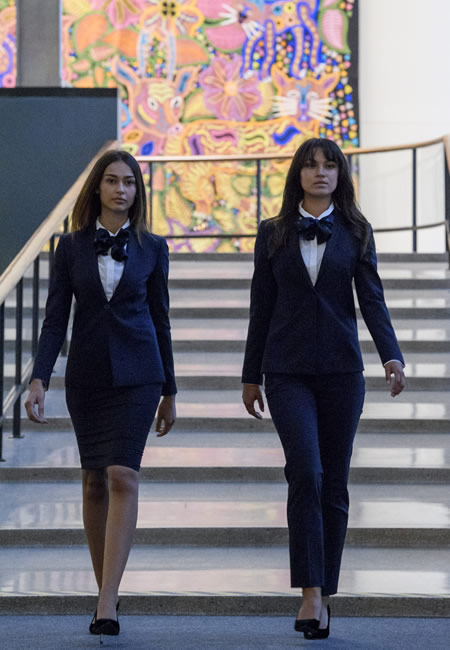

Photos: A new wardrobe for United Nations tour guides created by fashion designer Elie Tahari was launched at a special event held in the UN General Assembly Building. 14 September 2017. United Nations, New York. UN Photos/Manuel Elias.
|GlobalGiants.Com|
Edited & Posted by Editor | 3:35 PM | Link to this Post
September 11, 2017
India at 70: Rahul Gandhi to Speak at Berkeley Today
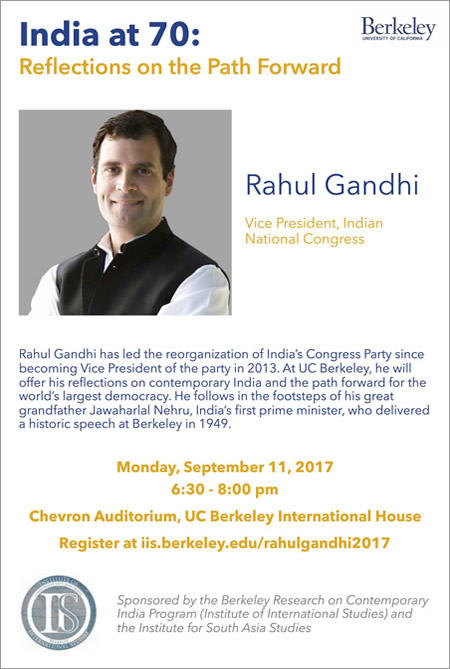
Photo: Rahul Gandhi talk. Event Flyer.

Photo: A walkout on the UC Berkeley campus. Year 2009. Image Credit: Ben Chaney.
Berkeley, California: Indian National Congress vice president Rahul Gandhi today began his two-week visit to the US during which he will interact with global thinkers and political leaders as part of an outreach initiative by his party.
In his first engagement, Gandhi would address students of the prestigious University of California, Berkeley, on ‘India at 70: Reflections on the Path Forward’, in which he would talk about his vision about India and where the country is leading.
“He is here at the University of California, Berkeley, where Pandit Jawaharlal Nehru addressed in 1949 as the Prime Minister. Today we are at the cross roads where core value of Indian democracy, secularism, and pluralistic society is in danger,” Congress spokesman Madhu Goud Yaskhi said.
The event venue is full and the registration for Rahul Gandhi’s talk has already been closed. The event will be held at the Chevron Auditorium, UC Berkeley International House, from 6.30 PM to 8 PM local time.
The event is being sponsored by the Institute for South Asia Studies, UC Berkeley; and the Berkeley Research on Contemporary India Program, Institute of International Studies, UC Berkeley.
|GlobalGiants.Com|
Edited & Posted by Editor | 5:41 PM | Link to this Post
August 28, 2017
UN Secretary-General Meets Mayor of New York City
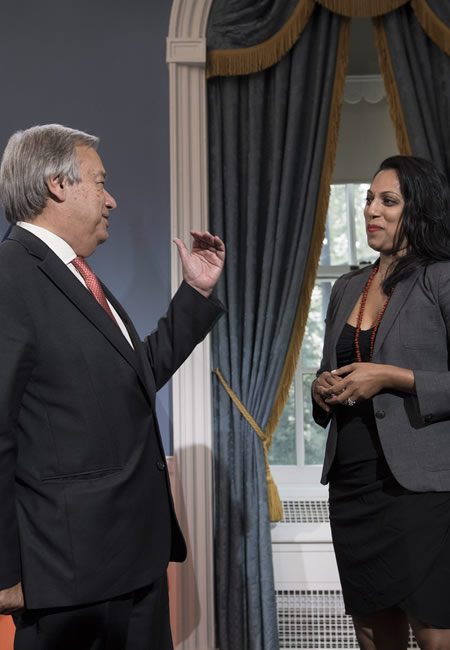
Photo: UN Secretary-General António Guterres (left) speaks with Penny Abeywardena (right), New York City’s Commissioner for International Affairs, prior to a meeting with Mayor Bill de Blasio. 24 August 2017. United Nations, New York. UN Photo/Mark Garten.
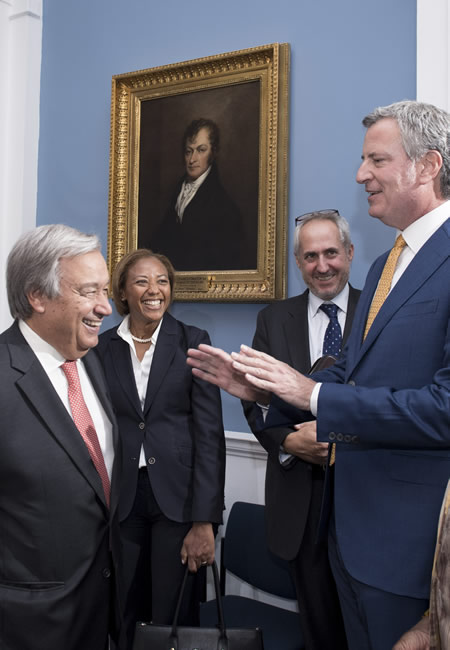
Photo: UN Secretary-General António Guterres (left) meets with New York City Mayor, Bill de Blasio (right). 24 August 2017. United Nations, New York. UN Photo/Mark Garten.
|GlobalGiants.Com|
Edited & Posted by Editor | 11:48 AM | Link to this Post